Blog · 6 min read
DIY vs Hiring a Tile Setter: An Honest Decision Framework
Which tile jobs are genuinely beginner-friendly, which ones only look easy, what pros charge in 2026, and how to vet a tile contractor.
Free calculator — runs in your browser, nothing is uploaded.
The honest skill ladder
Tile work has a real skill ladder, and knowing your rung is the whole decision. Backsplashes and small straight-set floors are genuinely beginner-friendly — small area, dry location, forgiving materials, and mistakes are visible immediately and cheap to redo.
Showers sit at the top of the ladder: waterproofing, slope, and vapor management all have to be right, and failure is invisible until it's expensive. A first-timer's backsplash mistake costs a Saturday; a first-timer's shower mistake costs a mold remediation.
What pros actually charge
In 2026, professional tile labor runs roughly $7–15 per sq ft for straightforward floors, $10–20 for showers and complex work, with high-cost metros at the top and beyond. Minimum job charges of $500–1,000 are normal for small repairs.
That money buys speed (a pro sets in a day what takes a DIYer three), warranty, and — in showers — liability for waterproofing. On a 40 sq ft backsplash, the labor savings barely clear $400; on a 400 sq ft floor, they're real.
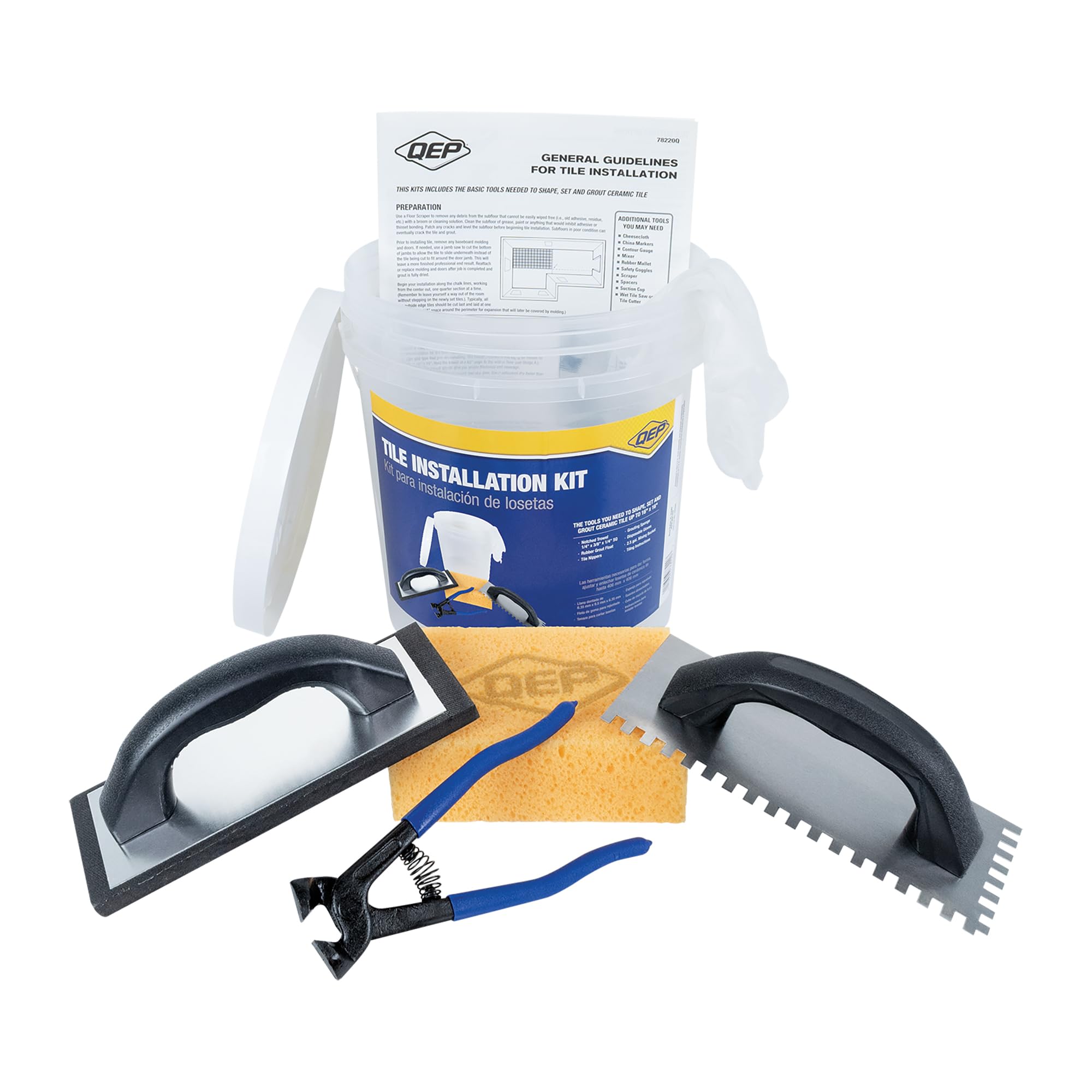
If you DIY: the starter kit

Tile Tools Stainless Steel Square Notch Trowel Set Plus Rubber Grout Float and Grout Sponge for Tiling Installation Grouting
Check price on Amazon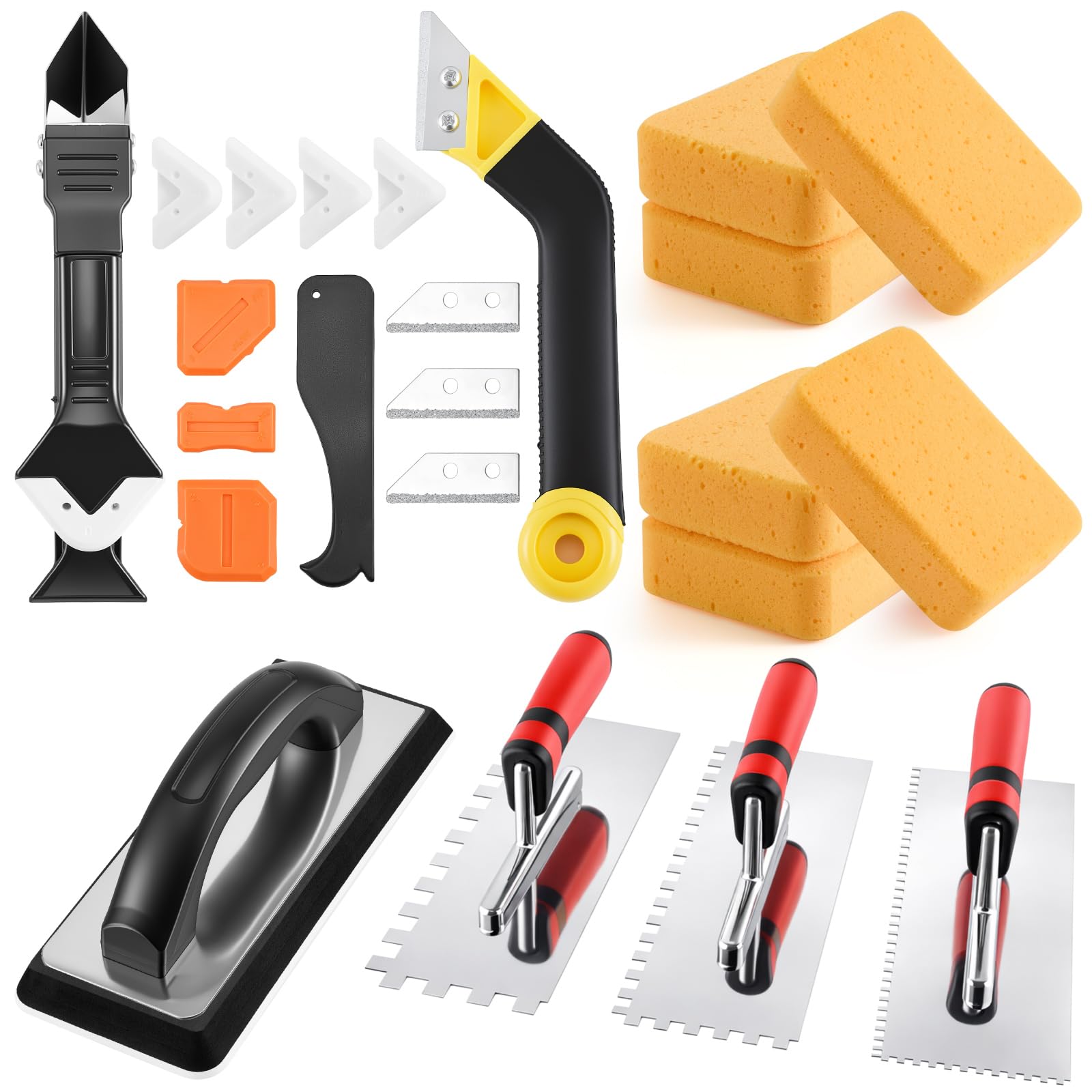
23 Pcs Tile Trowel Kit with Grout Float, Removal Tool, Silicone Caulking Tool, Grout Saw with 3 Blades, Sponges and Tile Trowels Set for Floor Wall Installation
Check price on Amazon
Paid links — we may earn a commission at no extra cost to you.
The hybrid approach
The sweet spot for many remodels: DIY the forgiving surfaces (backsplash, laundry room floor, fireplace surround) and hire out the wet and huge ones (shower, whole-house large format). You learn the craft where tuition is cheap.
Another legitimate hybrid: do your own demo and prep to the pro's spec, then pay for the skilled setting only. Most setters welcome a clean, flat, ready substrate.
Vetting a tile setter
Tile is unlicensed in most states, so vetting is on you:
- Ask what waterproofing system they use in showers — a brand name (Kerdi, RedGard, Hydro Ban) is the right kind of answer
- Ask to see a job from 2+ years ago, not just last week's
- Get prep, membrane, and movement joints itemized in the quote
- Be wary of the lowest bid by a wide margin — prep is what they cut
FAQ
What's the easiest first tile project?
A kitchen backsplash: small, dry, vertical (gravity shows mistakes immediately), and mastic makes it forgiving. A laundry or powder-room floor is a good second.
How much can I save DIYing a bathroom floor?
Labor on a 40 sq ft bath floor is roughly $300–600. Subtract tool costs ($150–250 if starting from zero) and your realistic first-job time, and the savings are modest but the skill is yours forever.
Should a tile setter be licensed and insured?
Licensing varies by state — many don't license tile specifically. Insurance (general liability) is non-negotiable everywhere: a flooded shower pan is a liability claim you don't want directed at you.
Keep reading
- How Much Does It Cost to Tile a Bathroom? (Full Breakdown)
Real 2026 numbers for a 5×8 bathroom: floor, shower walls, and the prep line items quotes hide — demo, waterproofing, backer board and trim.
- The 7 Tile Mistakes That Show Up a Year Later
Skips that pass inspection on day one and fail by month twelve: no membrane, thin coverage, slivers at the doorway, wrong caulk, and more.