Blog · 5 min read
7 Subway Tile Layout Patterns (and Which Ones Hide Mistakes)
Running bond, stacked, herringbone, vertical and basketweave — what each pattern does to a wall, which ones forgive wobbly walls, and the waste each adds.
Free calculator — runs in your browser, nothing is uploaded.
The classics
Running bond (the 50% offset brick pattern) is the default for a reason: it's timeless, and the staggered joints disguise out-of-plumb walls and slight tile size variation. If your walls are less than perfect — and they are — running bond is your friend.
Stacked (grid) is the modern look: clean vertical and horizontal lines with zero offset. It's also merciless — every wall wave and every 1/64-inch size variation between tiles shows as a crooked line. Stacked demands flat walls and calibrated tile.
The statement patterns
Herringbone turns humble subway tile into a feature wall. It needs 15–20% extra material for the 45-degree end cuts, doubles your cutting time, and requires a precise 45-degree reference line to start — but nothing else delivers that much design per dollar of tile.
Vertical stacked and vertical running bond draw the eye up and make low ceilings feel taller — a genuinely useful trick in basement baths. Basketweave pairs of horizontal and vertical tiles read as crafted and traditional.
Subway tile picks

White Glossy Ceramic Subway Tile 3x6 Wall Backsplash Made in USA (Full Box 100 Pieces)
Check price on Amazon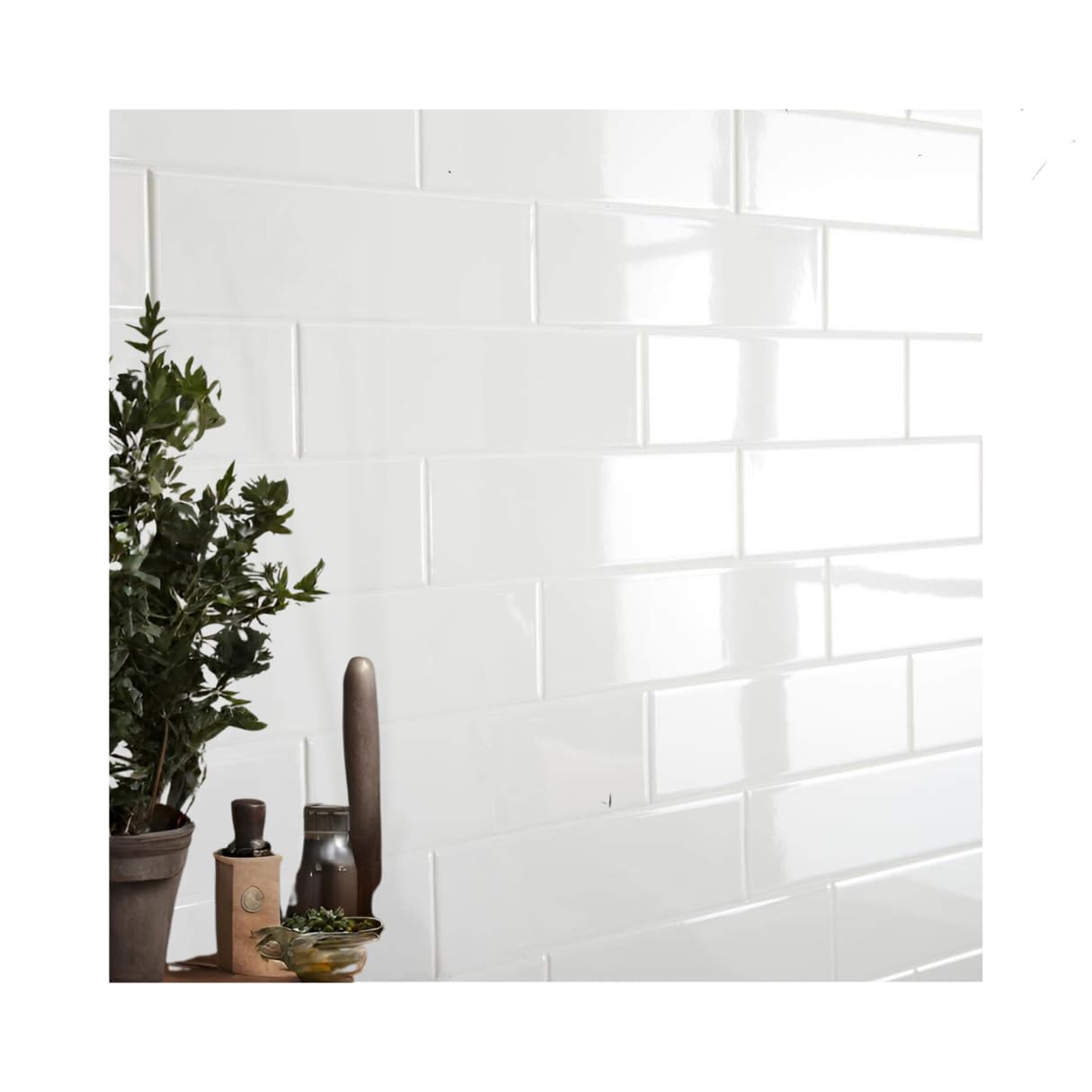
Tenedos USCT White 3x12 Glossy Ceramic Subway Tile – 50 Pcs (12.5 Sqft) for Kitchen Backsplash, Bathroom Shower Walls, Accent Decor, Easy Glue-Down Installation
Check price on Amazon
3x6 Essential White Matte Satin Finish Ceramic Subway Tile Wall Backsplash Made in USA (100)
Check price on Amazon
Paid links — we may earn a commission at no extra cost to you.
Choosing by room and skill
Quick guidance:
- First project, wavy walls: running bond
- Modern kitchen, flat walls, calibrated tile: stacked
- Feature wall or niche, confident DIYer: herringbone
- Low ceilings: vertical patterns
- Waste to order: 10% for running/stacked, 15–20% for herringbone
FAQ
Does pattern choice change how much tile I need?
Yes. Straight patterns waste ~10%; herringbone and diagonal patterns waste 15–20% because every edge cut is at an angle and offcuts often can't be reused.
Is herringbone hard for a beginner?
It's the cutting and the starting line that get people. If you can set an accurate 45-degree reference and you're patient with the wet saw, it's doable — practice the layout dry on the floor first.
Which pattern makes a small bathroom look bigger?
Vertical stacked draws the eye upward; a long horizontal running bond widens narrow walls. Both beat busy small patterns, which chop the room into visual confetti.
Keep reading
- How to Tile a Kitchen Backsplash (Beginner-Friendly)
The full backsplash workflow: find your starting line, deal with outlets and the under-cabinet gap, choose mastic vs thinset, and grout without scratching.
- Grout Color: Match the Tile or Contrast It?
What matching vs contrasting grout does to a room, why white grout is a maintenance commitment, and how to test color before committing to 200 square feet.