Blog · 5 min read
Large-Format Tile: Is Your Floor Flat Enough?
The 1/8-in-in-10-ft rule, why 15-inch tile changed the standards, how to test your slab with a straightedge, and what fixing it costs.
Free calculator — runs in your browser, nothing is uploaded.
Why 15 inches is the line
Tile standards split the world at 15 inches. Below it, floors need to be flat within 1/4 inch over 10 feet. At or above it — which is most modern floor tile — the tolerance tightens to 1/8 inch over 10 feet and 1/16 inch over 24 inches.
The physics: a long tile bridges dips like a plank over a ditch. Mortar can't fill the void without shrinking and cracking, so the tile rocks, the edges lip, and a point load on the unsupported span snaps it.
The 10-minute flatness test
You need a 10-ft straightedge — a long level, a straight 2×4, or a cut piece of trim works. Lay it down in a grid pattern across the room, rotating directions, and try to slide a pencil or a stack of playing cards under it.
Mark every gap over 1/8 inch directly on the floor. The map you draw tells you whether you're spot-filling three saucers (cheap) or pouring the whole room (a materials order).
Handling big tile

for tile Leveling Suction Cup Lifter, 118mm Vacuum Plate for Large Wall Tiles and Marble, Aluminum Alloy Handle for Glass Stone
Check price on Amazon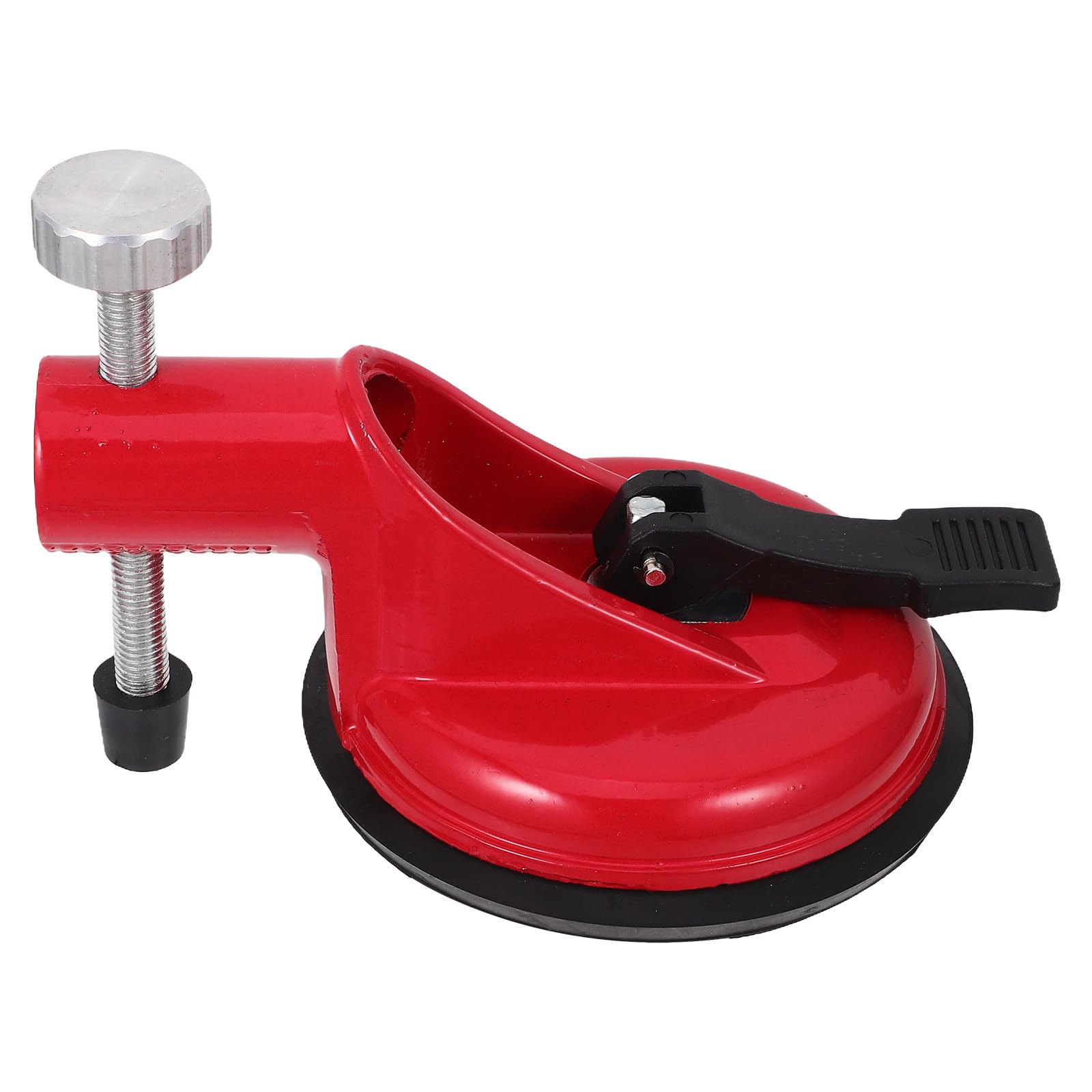
Tile Leveling Suction Cup Lifter Adjustable Knob for Glass and Tiles | Durable Metal and Rubber Build, Tension Adjuster Design, Construction Use for Installing and Stabilizing Levels
Check price on Amazon
QEP 75012 XTREME Series Double Suction Cup for Large Format Tile, 15" - Blue 200 lb. lift capacity
Check price on Amazon
Paid links — we may earn a commission at no extra cost to you.
What fixing costs
Spot fixes with patching compound: a bag or two, under $50. A full self-leveling pour over 200 sq ft at 1/8-inch average: roughly 4–6 bags plus primer, $200–350 DIY, or $2–4 per sq ft professionally installed.
Grinding high spots is the other half — a concrete grinder rental is $60–100/day and makes heroic dust. Skipping prep to save $300 risks a $5,000 floor. The math isn't subtle.
FAQ
My floor is level but has waves. Is that OK?
No — and this is the common confusion. Level means horizontal; flat means planar. Tile only cares about flat. A sloped but flat floor tiles beautifully; a level but wavy floor fails.
Can extra-thick thinset compensate for a wavy floor?
Only within the mortar's rated bed thickness (often 3/4 inch for large-and-heavy-tile mortars), and building up beds is slower and less reliable than leveling first. Fix the floor, then set tile.
Do wood subfloors have a flatness standard too?
Same 1/8-in-10-ft rule, plus stiffness requirements (joists at L/360 minimum for ceramic, L/720 for stone). Flat and stiff are different problems — a floor can fail either one alone.
Keep reading
- Avoiding Lippage on Large-Format Tile
What causes one tile edge to sit higher than the next, the 1/8-in-in-10-ft flatness rule, why 50% offsets are banned on plank tile, and how leveling clips help.
- Leveling a Floor for Tile: Flat vs Level, and How to Fix Both
Why tile needs flat (not level), the straightedge test, self-leveling compound basics, primers, and depth math that decides your bag count.