Guide · 5 min read
Avoiding Lippage on Large-Format Tile
What causes one tile edge to sit higher than the next, the 1/8-in-in-10-ft flatness rule, why 50% offsets are banned on plank tile, and how leveling clips help.
Free calculator — runs in your browser, nothing is uploaded.
Lippage is a flatness problem first
Lippage — one tile edge sitting higher than its neighbor — catches toes and collects grime, and on large tile it's brutally visible. The industry standard allows just 1/32 inch of lippage on large-format porcelain. The root cause is almost always the floor, not the setter's hands.
Tiles 15 inches or longer need the substrate flat within 1/8 inch over 10 feet and 1/16 inch over 24 inches. Check with a long straightedge before you open a single bag of mortar.
Tile isn't flat either
Long porcelain tiles come out of the kiln with a slight bow — it's inherent to firing something that big. Two bowed tiles laid side by side at a 50% offset put each tile's high middle next to its neighbor's low end: maximum lippage by design.
That's why manufacturers and standards ban running-bond offsets greater than 33% on plank tile. Use a third-offset (33%) or less, or a stacked pattern, and the bows line up with each other instead of fighting.
Leveling systems that prevent lippage

DGSL Tile Leveling System with Plier, 300 Tile Spacers 1/8" and 100 Wedges | Tile Leveling Clips with Tile Plier, Anti Lippage Tile Leveler Spacers for Professional Ceramic Tile and Stone Installation
Check price on Amazon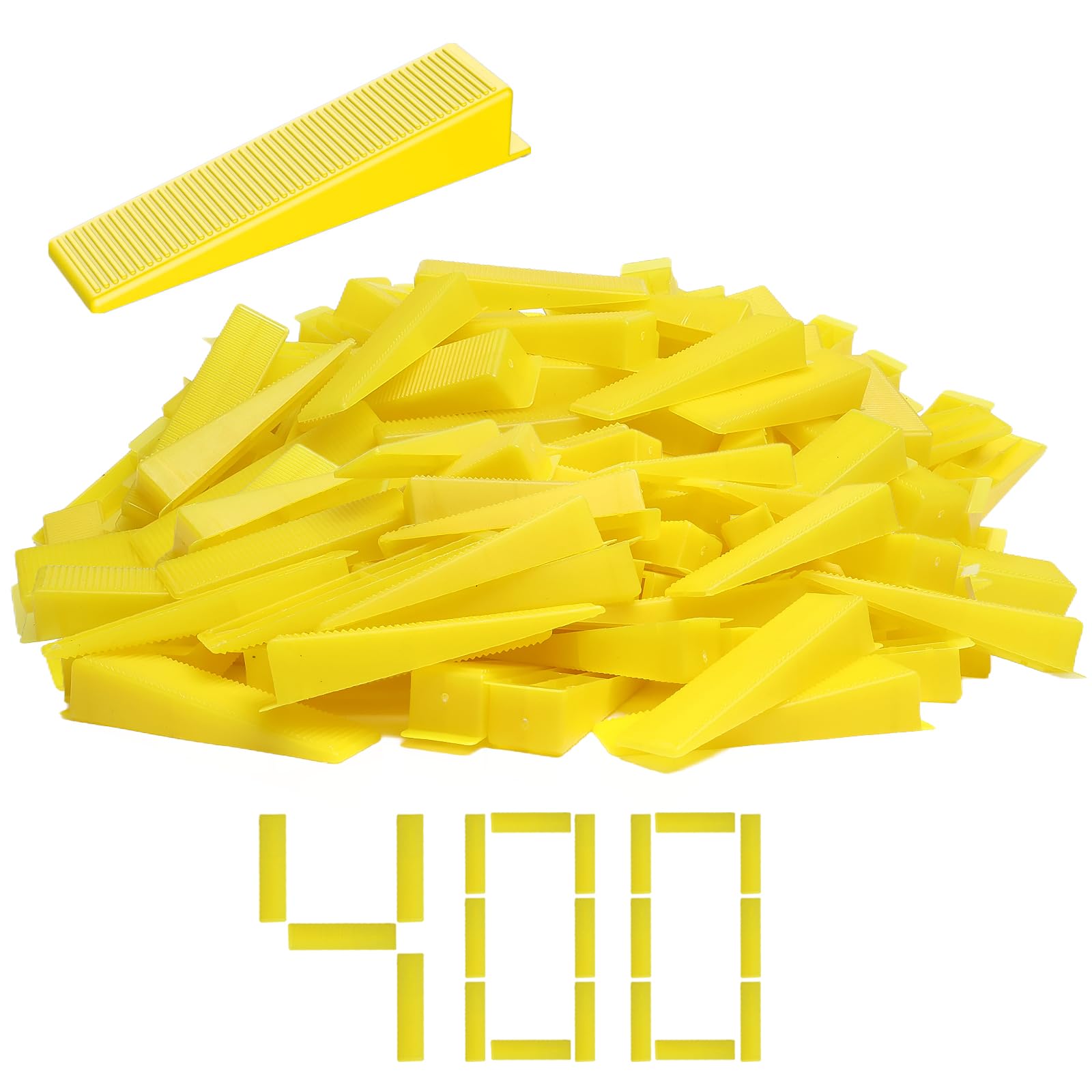
DGSL 400PCS Tile Leveling System Tile Wedges for 1/8", 1/16", 1/32" Spacers | Tile Leveling Wedges for Most Sizes Tile Spacers and Tile Leveling clips, Tile Leveler Tools for Floor Tiles Installation
Check price on Amazon
DGSL Tile Leveling System with Plier, 600 Tile Spacers 1/8" and 200 Wedges | Tile Leveling Clips with Tile Plier, Anti Lippage Tile Leveler Spacers for Professional Ceramic Tile and Stone Installation
Check price on Amazon
Paid links — we may earn a commission at no extra cost to you.
Back-buttering and coverage
Large tile needs a skin coat of mortar on its back (back-buttering) plus the troweled bed on the floor, collapsing the ridges to get the 95% mortar coverage that wet and exterior areas demand. Dry spots under a big tile become hollows, and hollows crack under point loads.
Pull up a freshly set tile early in the job and look at the back. If you see trowel lines instead of full contact, change trowel size or technique before setting another square foot.
Where leveling clips fit in
A clip-and-wedge leveling system locks adjacent tiles into the same plane while the mortar cures. It won't fix a wavy floor — that's self-leveling compound's job — but it eliminates the small height differences that come from tile bow and hand-setting.
Budget a bag of clips per 75–100 sq ft and plan for the clips to snap off below the grout line. On 24 × 48 tile, pros consider them close to mandatory, not optional.
FAQ
How much lippage is acceptable?
Industry standards (ANSI A108.02) allow 1/32 inch for large-format tile with joints under 1/4 inch, plus the tile's own warpage. If you can feel edges with a bare foot, it's too much.
Can I fix lippage after the mortar cures?
Practically, no — the tile has to come up and be re-set. Minor lippage on a finished job is sometimes ground down by stone restoration pros, but prevention is dramatically cheaper.
Do leveling clips replace back-buttering?
No. Clips align faces; they don't create mortar coverage. Large tile still needs proper troweling, back-buttering, and ridge collapse for a bonded, hollow-free install.
Keep reading
- Large-Format Tile: Is Your Floor Flat Enough?
The 1/8-in-in-10-ft rule, why 15-inch tile changed the standards, how to test your slab with a straightedge, and what fixing it costs.
- Choosing the Right Tile Size for Your Room
How tile size changes a room: when 12×24 beats 4×4, why small rooms can take large tile, grout line math, and the flatness rule for big formats.